Home › Asphalt Pathways, Sidewalks, and Trails
Connect your site with smooth, accessible routes using asphalt pathway paving in Charlotte, NC. We build walkways, multi use trails, and sidewalks for parks, schools, and commercial campuses. Our paths are designed for pedestrians, bikes, and strollers with gentle slopes and clean transitions.
Precision Asphalt Charlotte provides professional asphalt pathway paving throughout Charlotte, NC, North Carolina and the surrounding area. Our licensed, insured crew delivers safe, clean, on-time work with a free estimate before anything begins. Call (704) 387-3626 or request your free quote.
Asphalt Pathways, Sidewalks, and Trails in Charlotte, NC
When you add an asphalt pathway, sidewalk, or trail, you are not just paving a strip of ground. You are shaping how people move through your property every day. At Precision Asphalt Charlotte, we focus on building walking surfaces that match how your space is really used in our local climate and soil conditions.
In and around Charlotte, soils vary from hard red clay to softer fill. That affects how we design and build each pathway. A walking trail behind a South Charlotte subdivision, a sidewalk along a busy neighborhood street, and a short access path to a clubhouse all need different base depths, drainage, and surface finishes. We start by walking the route with you, noting slopes, shade, tree roots, and how people already cut across the area.
Our team has installed asphalt pathways in HOA communities, church campuses, school grounds, business parks, and private estates throughout Mecklenburg County. We understand local code requirements, ADA considerations, and the expectations of Charlotte property managers and HOA boards. Our goal is for your paved path to look intentional, feel comfortable underfoot, and last for many years with minimal maintenance.
How We Design Practical Walking Routes That Actually Get Used
A successful asphalt pathway or trail starts with layout, not with the asphalt truck. Precision Asphalt Charlotte spends real time on the front end planning the route so it makes sense for the people who will use it.
First, we review your property goals. Do you need a quiet walking loop for residents, a simple sidewalk that connects parking to an entrance, or a shared-use path that will also see stroller or bike traffic? We look at desire lines, which are the natural dirt paths where people are already walking. Aligning with those lines reduces future cutting across grass and keeps landscaping looking neat.
Next, we measure and stake the proposed route. For sidewalks along drive lanes or parking lots, we typically recommend widths from 4 to 6 feet. Community trails and greenway style paths usually range from 6 to 10 feet, depending on expected use and whether people will pass each other frequently. We also evaluate slopes to keep grades comfortable and, where needed, meet ADA guidelines for accessibility.
In shaded or low areas that stay damp after a Charlotte summer storm, we adjust the path alignment or add drainage solutions such as swales or underdrains. Around trees, we plan curves that protect root systems as much as possible and reduce the chance of future heaving. Once you are happy with the route and width, we move to detailed construction planning and scheduling.
Step-by-Step: Our Asphalt Pathway Paving Process
Homeowners and property managers often ask what will actually happen on site. Precision Asphalt Charlotte follows a clear, repeatable process for pathways, sidewalks, and trails so you know what to expect.
1. Site preparation and clearing. We remove grass, roots, and organics along the staked route. For new trails through wooded or brushy areas, this includes light grading and trimming of low branches for safe pedestrian clearance.
2. Excavation and subgrade shaping. We cut to the planned depth so there is room for the stone base and asphalt. Typical walkways need 4 to 6 inches of compacted stone under the asphalt, more in soft or poorly drained areas. We shape the subgrade with a slight crown or cross slope to move water off the finished surface.
3. Base stone installation. We install a graded aggregate base (often called ABC stone) and compact in thin lifts using plate compactors and rollers sized for pathway work. This is where many pathways fail if not done correctly. We pay attention to tight edges and transitions so the base does not settle and create trip hazards later.
4. Edge containment. Where the pathway does not run against curbing or existing pavement, we may recommend edge restraints such as compacted shoulder material or, for higher end projects, concrete ribbon edges. This helps support the asphalt and keeps it from raveling at the sides.
5. Asphalt paving. For most pathways we use fine mix asphalt that provides a smoother, more comfortable walking surface than coarse roadway mixes. Thickness typically ranges from 1.5 to 2.5 inches compacted, adjusted for expected traffic and soil conditions. The mix is laid, leveled, and compacted while still hot to lock in proper density.
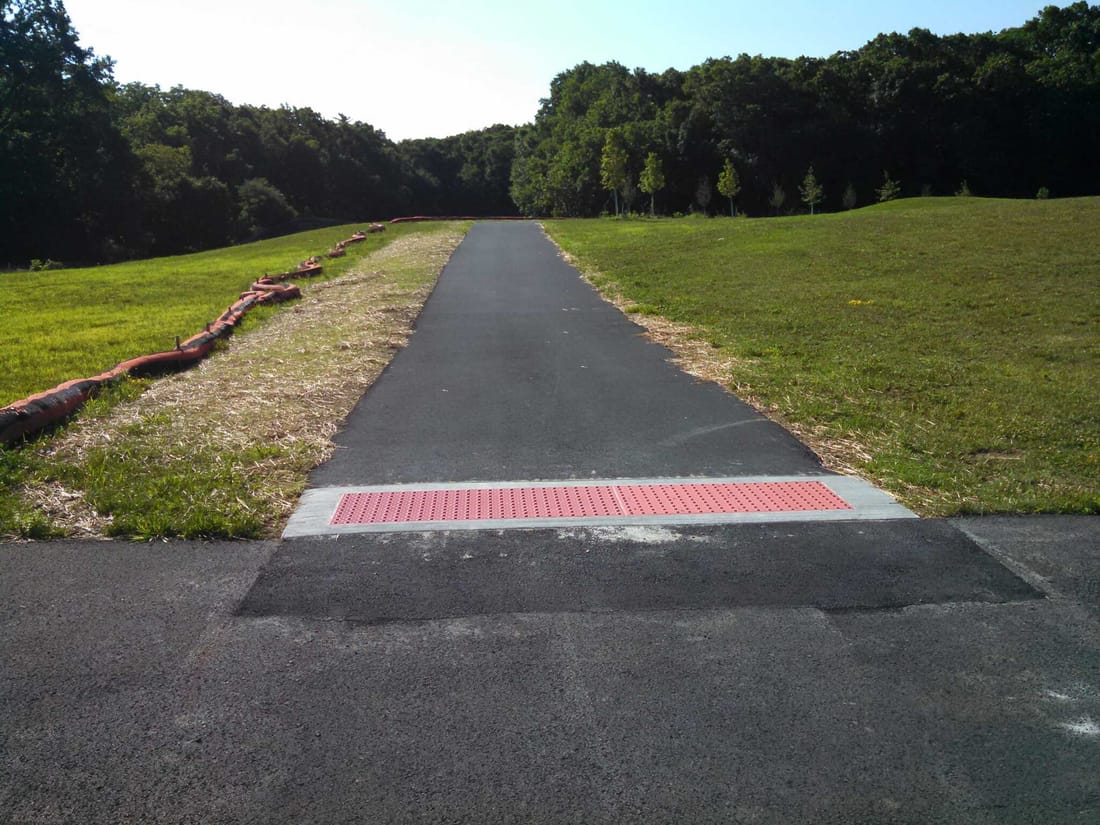
6. Detailing and transitions. We hand-finish around poles, utility boxes, and tight curves, and we form flush transitions to existing sidewalks, pads, or thresholds so wheels and walkers move smoothly. Once the asphalt cools, the area is cleaned and opened to foot traffic, usually within a few hours, with vehicle access restricted if the path will occasionally be driven on by maintenance carts or small vehicles.
Materials, Options, and What Drives the Cost
Pathway projects vary widely in price because each site is different. Precision Asphalt Charlotte is transparent about what affects your cost so you can make informed decisions.
Route length and width are the most obvious factors. A 300 foot narrow sidewalk from parking to an office entrance will cost less than a 1,200 foot loop trail in a wooded common area. Curves, intersections, and tie-ins to existing hardscape add layout and labor time but often improve function and appearance.
Base depth and soil conditions are major cost drivers in the Charlotte area. If we find soft spots, old fill, or poor drainage, we may recommend undercutting and replacing with additional stone. While that adds to the initial price, it prevents rutting and cracking that would lead to expensive repairs in a few seasons.
Mix type and thickness also influence cost. A standard pedestrian pathway can often use a single lift of surface mix, while shared-use trails or service access paths might need a heavier structure with a binder course under the surface layer. In shaded, tree lined routes, we might suggest slightly thicker asphalt to better handle root pressure over time.
Finishing options such as concrete end pads at doors, signage posts, small retaining walls, or striping for shared bike and pedestrian use can be included as needed. We discuss all of this during your estimate, break out line items when helpful, and tailor the design to your budget and long term maintenance expectations.
Local Challenges: Roots, Drainage, and Charlotte’s Climate
Charlotte’s combination of clay soils, summer heat, and sudden thunderstorms creates specific challenges for asphalt pathways, sidewalks, and trails. Precision Asphalt Charlotte addresses these conditions from the start so your path ages gracefully.
Tree roots are a major issue in established neighborhoods and mature communities. If a path is placed too close to larger trees, roots can lift the surface and create tripping points. We evaluate root zones, recommend minor route shifts where possible, and in some cases install root barriers or additional base structure to help protect the pavement. We also explain which trees are likely to cause problems so you can plan long term landscaping.
Drainage is another key concern. Clay holds water, and standing water under or on top of a pathway shortens the life of the asphalt. We use cross slopes, shallow swales, and, when necessary, subsurface drainage to move water off and away from the path. In low spots that cannot be raised, we may suggest thicker base and asphalt, or in limited cases, small drains that tie into existing storm systems.
Charlotte’s freeze-thaw cycles are less severe than in northern states but still matter. Micro-cracking from trapped moisture can widen over time. This is why we encourage sealing newer pathways after an appropriate curing period and scheduling periodic inspections. Our familiarity with local conditions helps us recommend the right mix, thickness, and maintenance schedule so your path stays safe and attractive for years.
What to Expect When You Work With Precision Asphalt Charlotte
Our goal is to make your pathway, sidewalk, or trail project straightforward and predictable from the first visit through long term care.
During the initial consultation, we walk the site with you, listen to how you expect people to use the area, and point out any concerns about grades, drainage, or roots. We then provide a written proposal that outlines scope, approximate schedule, and any options you can choose from, such as increased thickness or upgraded edging.
When work begins, you will know what days crews will be on site and what areas will be temporarily inaccessible. For HOAs, churches, schools, and office parks, we can stage the work to keep key access points open and can provide notices you can share with residents or tenants. We maintain a clean job site and coordinate with landscapers or irrigation contractors if adjustments are needed.
After the pathway is installed, we walk it with you to confirm that slopes, transitions, and appearances meet expectations. We explain recommended curing times, when heavy equipment should be kept off the surface, and how to handle de-icing in winter without harming the new asphalt. We are also available for future sealcoating, crack filling, and repairs so you have one local partner who knows your property.
To discuss asphalt pathway paving for your Charlotte area property, contact Precision Asphalt Charlotte. Whether you are planning a simple sidewalk addition or a full walking trail network, we can help you choose a design and construction approach that fits your site, your users, and your budget.