Home › Road, Street, and Municipal Paving
Keep traffic moving on safe, smooth surfaces with professional road paving in Charlotte, NC. We construct and resurface streets, subdivision roads, and municipal lanes with durable asphalt. Our team manages traffic control, milling, paving, and compaction to deliver long lasting driving surfaces.
Precision Asphalt Charlotte provides professional road paving throughout Charlotte, NC, North Carolina and the surrounding area. Our licensed, insured crew delivers safe, clean, on-time work with a free estimate before anything begins. Call (704) 387-3626 or request your free quote.
Road, Street, and Municipal Paving in Charlotte, NC
Road paving in Charlotte is not just about putting down blacktop. It is about building surfaces that handle heavy traffic, summer heat, freezing nights, and the kind of stormwater we see in our region. At Precision Asphalt Charlotte, we focus on local neighborhood streets, small municipal roads, church and school drives, access lanes, and connector streets that keep the city moving.
We understand the difference between a lightly traveled subdivision loop and a busy cut‑through street carrying delivery trucks. That difference affects pavement thickness, base preparation, drainage design, and long term maintenance planning. Our team works with HOAs, developers, small municipalities, and private road owners around Charlotte to match the pavement design to the real traffic the road will see.
Because we live and work here, we design every road project with Charlotte’s climate in mind. The repeated cycles of hot sun, sudden thunderstorms, and occasional winter freezes can break down poorly built roads in just a few years. Our approach is to build once and build correctly, so your road holds up for the long term instead of constantly needing patches.
How We Evaluate Existing Roads Before Paving
Good road paving starts with an honest inspection of what is already there. Before we quote any street or municipal paving project, Precision Asphalt Charlotte walks the full length of the road, not just the worst spots, to see how the entire structure is performing.
We look for rutting in wheel paths, widespread cracking patterns (alligator cracking, block cracking, edge cracks), drainage issues, and signs that the base stone might be failing, such as soft areas that move under vehicle weight. We also check manholes, water valves, and utility cuts, since these are common weak points on Charlotte streets.
For older streets in neighborhoods like Steele Creek, University City, or east Charlotte, we often find that the original asphalt layer is too thin for today’s heavier vehicles and delivery traffic. In those cases we may recommend milling off a set depth, correcting any base failures, then rebuilding with a thicker asphalt structure instead of just adding another thin overlay.
This evaluation step protects you from spending money on a surface fix when the real problem is below. It also helps us give a more accurate, transparent cost estimate, since we know where we might hit soft subgrade, drainage problems, or utility adjustments.
Our Road Paving Process Step by Step
Once we have a clear plan, we move into construction with a defined sequence so traffic disruption is kept as low as possible.
1. Traffic control and communication. For subdivision streets and municipal roads, we coordinate with HOAs, city staff, or property managers to set work hours, access routes, and detour plans. We post notices in advance and use flaggers and signage that meet North Carolina work zone standards.
2. Milling and surface removal. If the existing surface is cracked or uneven, we use a milling machine to grind off the top layer of asphalt. This keeps curb reveal correct, removes ruts, and provides a clean, textured surface for the new asphalt to lock onto. Millings can often be reused on gravel drives or utility yards, which we discuss with the owner.
3. Base and subgrade repair. Anywhere we encounter pumping, soft spots, or deep potholes, we excavate down to firm material. We install new crushed stone, compact it in thin lifts with vibratory rollers, and proof roll the area to be sure it can handle traffic loads. In wet problem areas, we may add fabric separators or underdrain solutions so water does not keep weakening the base.
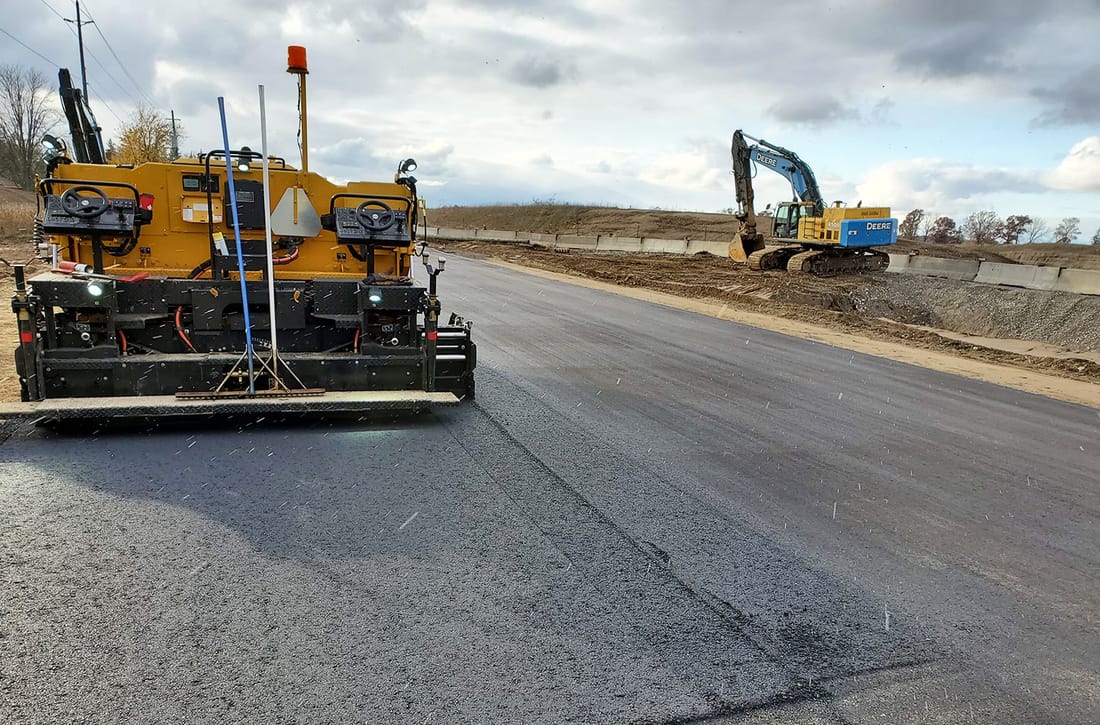
4. Asphalt paving in multiple lifts. For most local streets, we install a structural base course followed by a finer surface course. The base course provides strength, while the surface course gives smoothness and skid resistance. Each layer is laid at a controlled temperature, compacted with steel and rubber tire rollers, and checked for proper slope so water sheds to drains or ditches.
5. Joints and tie‑ins. Where new pavement meets existing roads, driveways, or intersections, we cut clean edges, apply tack coat, and roll the joint thoroughly. Proper joint construction is one of the main differences between a road that lasts and one that fails early at the seams.
6. Final rolling, cleanup, and punch list. We finish with a smooth‑drum roll, remove loose debris, and walk the project with the owner or representative to confirm that drainage, ride quality, and cleanup meet expectations.
Material Options and Design Choices for Charlotte Roads
Road paving is not one‑size‑fits‑all. Precision Asphalt Charlotte uses different asphalt mixes and design thicknesses based on your specific road.
Mix types. For local streets with typical passenger vehicles, we often use a dense graded surface mix that balances smooth ride and durability. For bus routes, industrial access roads, or locations with frequent trash trucks, we may specify a heavier duty surface mix or a thicker base course to resist rutting.
Thickness design. Charlotte’s clay soils and occasional saturated conditions mean that some areas need more structural asphalt than others. A quiet cul‑de‑sac might perform well with a thinner section over a good stone base, while a connecting street feeding a main road often requires a thicker asphalt buildup or upgraded base stone to hold up over time.
Drainage details. Standing water is one of the biggest enemies of asphalt. We pay close attention to crown (the slight center high spot), gutter lines, and swale depths so water moves off the road quickly. In low spots that tend to collect stormwater, we may suggest raising grades slightly, adding catch basins, or installing French drains to protect the pavement investment.
Surface texture. In areas near schools, sharp curves, or slopes, we make sure the selected surface mix provides good skid resistance when it is wet. This is especially important on shaded streets where moisture may linger longer after storms.
What Drives the Cost of Road Paving in Charlotte
Two roads that look similar can have very different costs. We are transparent about what affects price so HOAs, small towns, and private owners can plan budgets realistically.
Length and width. Total paved area is the most obvious driver, but narrow streets still require traffic control, mobilization, and equipment time, so there is a base cost to get a crew and machines on site.
Base and subgrade condition. Roads with solid stone bases and only surface cracking are less expensive to restore. Streets with deep failures, drainage issues, or weak subgrade require more excavation, stone, and time. We often provide options, such as full‑depth repair in bad sections only, to control costs while still solving the root problem.
Thickness and mix design. Heavier duty roads with thicker asphalt or specialized mixes cost more up front. However, for streets with heavy truck traffic, this investment usually pays off in fewer patches and overlays later.
Access and phasing. Working in tight neighborhoods, around schools, or on roads that must stay partially open can increase cost because it slows production and may require weekend or off‑hour work. We explain these tradeoffs clearly and help you phase work to stretch limited budgets.
Striping and extras. New lane markings, crosswalks, speed humps, and signage are often part of municipal or HOA projects. We can include these items so you have a single coordinated plan and cost summary.
Common Road Problems in Charlotte and How We Address Them
Charlotte roads face a combination of high summer heat, rain events, and clay subsoils that hold water. That combination leads to a few recurring problems we see across local streets.
Alligator cracking and base failure. When we see spider‑web cracking concentrated in wheel paths, it usually means the base or subgrade has given way. Our solution is not to just overlay, but to cut out and rebuild those sections full depth, then pave over a solid structure.
Edge breaking on narrow streets. On older subdivision roads where vehicles frequently drop wheels off the edge, the pavement edge starts to fracture. We widen and rebuild the edge with new stone and asphalt, and when possible, gently slope or support the shoulder so it can bear the occasional tire load.
Ponding water at low spots. Depressions that hold water quickly deteriorate under traffic. We correct these by milling and profiling the area to restore proper slope, or by making localized grade changes and adding drainage structures where needed.
Rutting from heavy traffic. On bus routes and trash truck paths, we sometimes see deep ruts without much cracking. This usually calls for a stronger asphalt mix or a thicker base, especially in stopping and turning areas such as intersections and cul‑de‑sacs.
By addressing these issues specifically instead of treating every road the same, Precision Asphalt Charlotte helps extend the life of your paved surfaces and reduce long term repair cycles.
Why Local Agencies, HOAs, and Private Road Owners Choose Precision Asphalt Charlotte
For road, street, and municipal paving, experience with local conditions is as important as the equipment on site. Precision Asphalt Charlotte brings both to every project.
We have paved and repaired neighborhood streets, church and school access roads, small municipal routes, and private communities across the Charlotte region. That means we know how to coordinate with city inspectors, utility providers, and neighborhood boards so projects move smoothly from planning to final punch out.
Our focus is on clarity and communication. Before work starts, we outline the scope in plain language, including which areas will be milled, where full‑depth repairs are planned, the approximate schedule, and what residents or road users should expect. During construction, a foreman is on site to answer questions and adjust traffic control or access as needed.
If you manage an HOA, a small town street system, or a private roadway around Charlotte, we can help you prioritize which sections need attention now, which can wait, and what kind of maintenance plan will protect your paving investment. From single street overlays to multi‑phase neighborhood resurfacing, we structure work so it fits both your budget and your community’s daily life.