Home › Parking Lot Sealcoating & Maintenance
Protect your investment with parking lot sealcoating in Charlotte, NC. Our crews clean the surface, treat oil spots, fill cracks, and apply premium sealer for a uniform finish. Regular maintenance helps slow aging, reduces water damage, and keeps your commercial pavement looking sharp for visitors.
Precision Asphalt Charlotte provides professional parking lot sealcoating throughout Charlotte, NC, North Carolina and the surrounding area. Our licensed, insured crew delivers safe, clean, on-time work with a free estimate before anything begins. Call (704) 387-3626 or request your free quote.
Parking lot sealcoating in Charlotte that is actually built for our weather
If you manage a parking lot in Charlotte, you already know our mix of hot summers, surprise winter freezes, and heavy rain can beat up asphalt fast. Precision Asphalt Charlotte focuses on parking lot sealcoating that is planned around local weather patterns and real-world use, not just a quick black coating.
Sealcoating is a protective layer that goes on top of your existing asphalt. It shields the surface from UV rays, oil and gas drips, and water that can seep into tiny cracks and turn into potholes. In Charlotte, the big enemy is the constant cycle of 90-degree heat in summer, then chilly, wet winters. That expansion and contraction makes unprotected pavement ravel, fade, and crack much earlier than it should.
Our approach starts with how your parking lot is actually used. A grocery store with heavy delivery truck traffic needs a different maintenance schedule than a small office lot that sees mostly passenger cars. We look at traffic flow, shade, drainage, and age of the asphalt, then recommend a sealcoating and maintenance plan that fits your specific property instead of a one-size-fits-all package.
How our parking lot sealcoating process works, step by step
When Precision Asphalt Charlotte sealcoats a parking lot, we follow a structured process so the sealer bonds correctly and wears evenly.
1. Inspection and planning: We walk the entire lot with you if you are available. We mark out problem areas like alligator cracking, birdbaths (low spots that hold water), oil-saturated patches, and edging that is breaking away. We also talk through timing since sealcoating in Charlotte usually makes the most sense from late March through early November when temperatures are consistently above 50 degrees at night.
2. Cleaning and surface prep: Proper prep is the difference between a coating that flakes off in a year and one that lasts. We mechanically blow and sweep the lot, cut back grass along the edges, and wire brush or power wash heavy oil spots. Oil-soaked areas are treated with a primer so the sealer will adhere instead of peeling.
3. Repairs before coating: Sealcoating is not a magic fix for structural problems, so we handle those first. That might include hot rubber crack filling for linear cracks, patching potholes with hot mix or high grade cold patch depending on season, and skin patching areas where the surface has raveled. By addressing these issues before we seal, we keep water from finding its way back in.
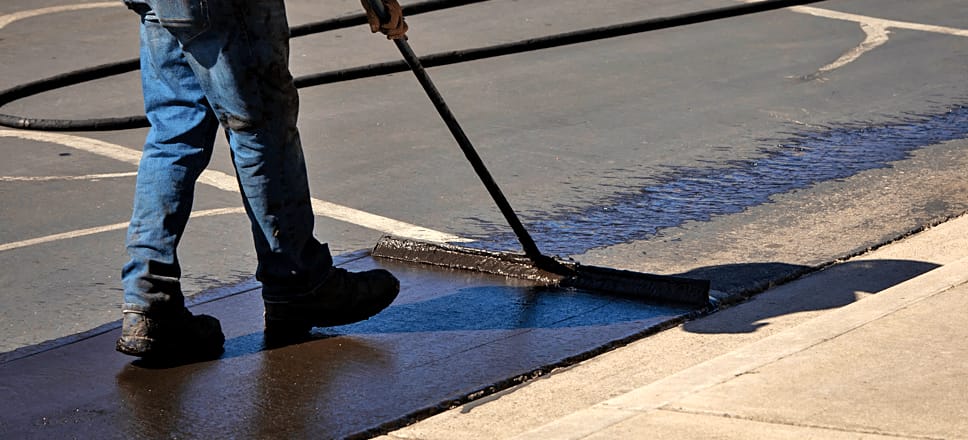
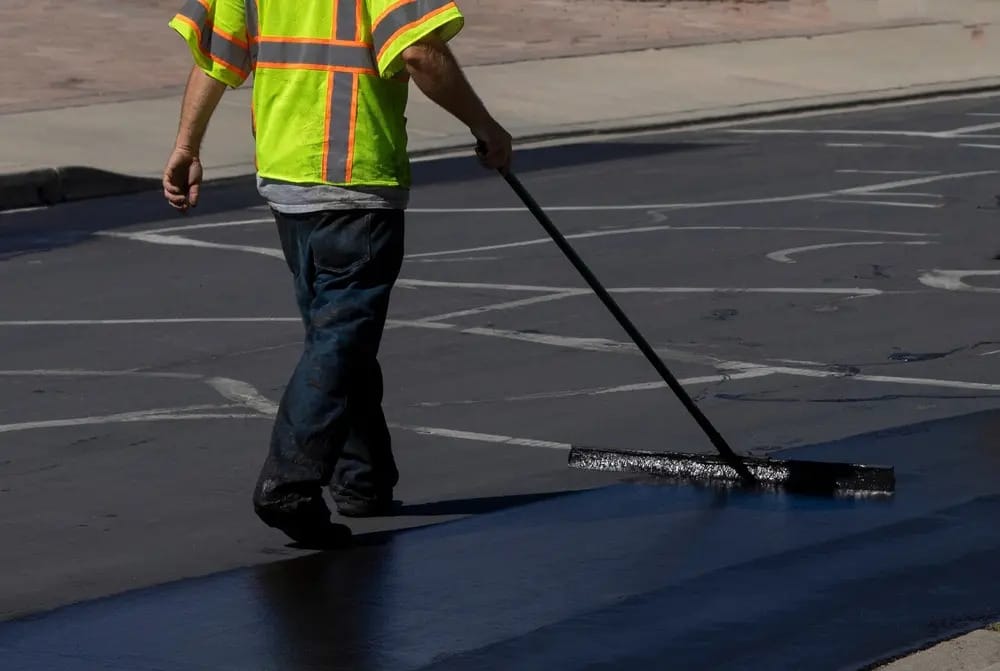
4. Applying the sealer: For commercial parking lots we typically use a refined coal tar or asphalt emulsion sealer with sand and latex additives, depending on local code and your preferences. The sand adds skid resistance and durability. We usually apply two coats, either by spray, squeegee, or a combination. On drive lanes we often use squeegee then spray for better build, and in tight areas we hand brush along curbs, islands, and doors.
5. Striping and reopening: After the sealer cures, usually 24 hours in warm, dry Charlotte weather and a bit longer in cool or humid conditions, we re-stripe the lot. We follow local ADA and fire lane requirements and can help adjust layout for traffic flow if needed. Once stripes and any pavement markings are dry, we remove barricades and reopen the lot.
What affects parking lot sealcoating cost in Charlotte
Two properties in Charlotte can have the same square footage and still get very different quotes for parking lot sealcoating. Precision Asphalt Charlotte is open about what drives the cost so you can compare proposals accurately.
1. Condition of your existing asphalt: A relatively smooth, uncracked 5-year-old lot might just need light crack filling and two coats of sealer. An older, gray, heavily cracked surface will require more crack routing and filling, patching, and edge repairs before we even open a sealer tank. Labor and materials for repairs are often the biggest variable.
2. Access and layout: Wide open lots are more efficient for equipment. Lots with many small islands, tight drive-thru lanes, or different upper and lower sections take longer. If we have to stage the work in multiple phases to keep businesses open and traffic flowing, that affects labor time as well.
3. Product type and number of coats: We match the material to how the lot is used. Higher traffic or heavier vehicle use may need a thicker build, which means heavier sand load and possibly a third coat in key areas like drive lanes and entrances. We also look at whether refined coal tar based products are allowed or preferred, or if you want an asphalt emulsion for a lower odor option.
4. Scheduling challenges: In Charlotte, afternoon thunderstorms are common in summer. To protect your investment, we plan around realistic drying windows. Sometimes that means starting very early or breaking the project into multiple days. We never cut dwell time just to stick to an unrealistic schedule because that is how tire marks and tracking happen.
When we provide a quote, we break it down so you can see what portion is repairs, what is sealcoating, and what is striping. That way you understand exactly what you are paying for and can prioritize if needed.
Maintenance, timing, and how often to sealcoat in our climate
A big question we hear around Charlotte is, “How often should I sealcoat my parking lot?” The honest answer is, it depends on use and exposure, but most commercial lots do well on a 3 to 5 year cycle when they are maintained in between.
Our general guidelines for the Charlotte area are:
• New asphalt: Wait at least 6 months, and often 9 to 12 months, before the first sealcoat so the surface can cure and oils can come to the surface. We will test the surface with a simple water and sand check to see if it is ready.
• Moderate traffic lots: Offices, churches, and medical clinics typically see best results sealing every 4 to 5 years, with annual crack inspections and touch-ups.
• High traffic or heavy vehicle areas: Shopping centers, busy restaurants, and industrial sites may need sealcoating closer to every 3 years, and much more frequent crack filling.
Our Charlotte seasons also affect timing. Spring and fall usually provide the best combination of moderate temperatures and lower humidity for sealcoating. We avoid sealing if overnight lows drop below 50, the forecast shows rain within 24 hours, or the surface is still damp from heavy morning dew. If you have a retail center or school with peak busy times, we can schedule work overnight or on weekends to reduce disruption.
Between sealcoats, the most important maintenance you can do is crack sealing and cleaning. Keeping leaves, mulch, and standing water off the surface helps prevent staining and soft spots. If you see new cracks or a section that is holding water longer than the rest, Precision Asphalt Charlotte can inspect that area before it becomes a larger repair.
What Charlotte property owners should look for in a sealcoating contractor
Choosing a contractor for parking lot sealcoating is not just about the lowest price. In the Charlotte market we see a lot of “spray and go” crews that leave a shiny surface for a season, then it wears away or peels in sheets.
When you talk to Precision Asphalt Charlotte or any other contractor, here are specific things to ask:
• What surface prep is included? Make sure the proposal mentions cleaning, crack filling, and patching where needed, not just “sealcoat parking lot.” Ask whether oil spots will be primed and how edges will be cut in.
• What material will be used, and what additives are in it? A professional should be able to tell you the sealer type, whether sand and latex are added, and the typical coverage rate per gallon per coat. If they cannot give you that detail, they may be cutting the mix.
• How many coats and which areas get what? High wear areas like entrances and drive lanes sometimes benefit from an extra pass. Parking stalls can often be standard two coats. A good plan is rarely exactly the same thickness everywhere.
• How will traffic be managed? For active businesses in Charlotte, we often phase projects so one section of the lot stays open while another is closed. That involves cones, caution tape, clear signage, and communication with your tenants or customers.
At Precision Asphalt Charlotte we document the condition of your lot before and after work, and we are local, so if there is an issue like a soft spot or tracking within a reasonable time frame, we can come back, investigate, and make it right. Our goal is a parking lot that looks sharper, lasts longer, and reflects well on your business every time a customer pulls in.