Home › Asphalt Sealcoating & Crack Filling
Protect your driveway investment with asphalt sealcoating in Charlotte, NC. Our team cleans the surface, fills cracks, and applies an even coat of high quality sealer. This helps block water, sun, and oil damage so your asphalt stays smoother and looks better for years.
Precision Asphalt Charlotte provides professional asphalt sealcoating throughout Charlotte, NC, North Carolina and the surrounding area. Our licensed, insured crew delivers safe, clean, on-time work with a free estimate before anything begins. Call (704) 387-3626 or request your free quote.
Asphalt protection built for Charlotte traffic and weather
If you drive around Charlotte, you see the same pattern every year: winter cracks, summer raveling, and faded gray asphalt that looks older than it really is. At Precision Asphalt Charlotte, our asphalt sealcoating and crack filling service is built specifically for these conditions, not a one-size-fits-all kit.
Sealcoating is a protective coating that goes on top of your existing asphalt, like a sunscreen and raincoat in one. It slows down damage from UV rays, gasoline and oil spills, and water that seeps into tiny hairline cracks. Crack filling is the step that comes first, where we treat and fill individual cracks so water cannot get under the pavement and break it up when temperatures swing.
In the Charlotte area, we see a lot of oxidized, light gray asphalt in neighborhoods like Steele Creek, University, and Matthews where surfaces are 3 to 10 years old and have never been sealed. We also see commercial lots around South End and North Tryon that faded quickly because of heavy traffic and constant sun exposure. For these properties, a proper combination of hot or cold crack sealant followed by a sprayed and squeegeed sealcoat can add years of useful life without the cost of a full repave.
Our goal is to keep your driveway or parking lot looking sharp and structurally sound while being honest about what is worth saving. If your asphalt still has a solid base and the surface has not completely rutted or broken apart, asphalt sealcoating and crack filling is usually the best value in terms of cost per extra year of life you get out of the pavement.
How our asphalt sealcoating process works, step by step
Every project with Precision Asphalt Charlotte follows a clear process so you know exactly what is happening on your property.
1. Inspection and planning: We start with a walk through of your driveway or lot, noting high traffic lanes, shaded areas that stay damp, standing water spots, and gas or oil soaked patches. We measure the surface to calculate how much material is needed, and we check if there are structural failures that sealcoating alone will not solve.
2. Cleaning and surface prep: Good sealcoating fails if prep is rushed. We use power blowers to remove loose debris, leaves, and dust, then wire brooms for edges and tight corners. On commercial lots, we often use mechanical sweepers or pressure washing for heavy dirt buildup. Oil spots are treated with a primer so the sealer can bond instead of peeling off later.
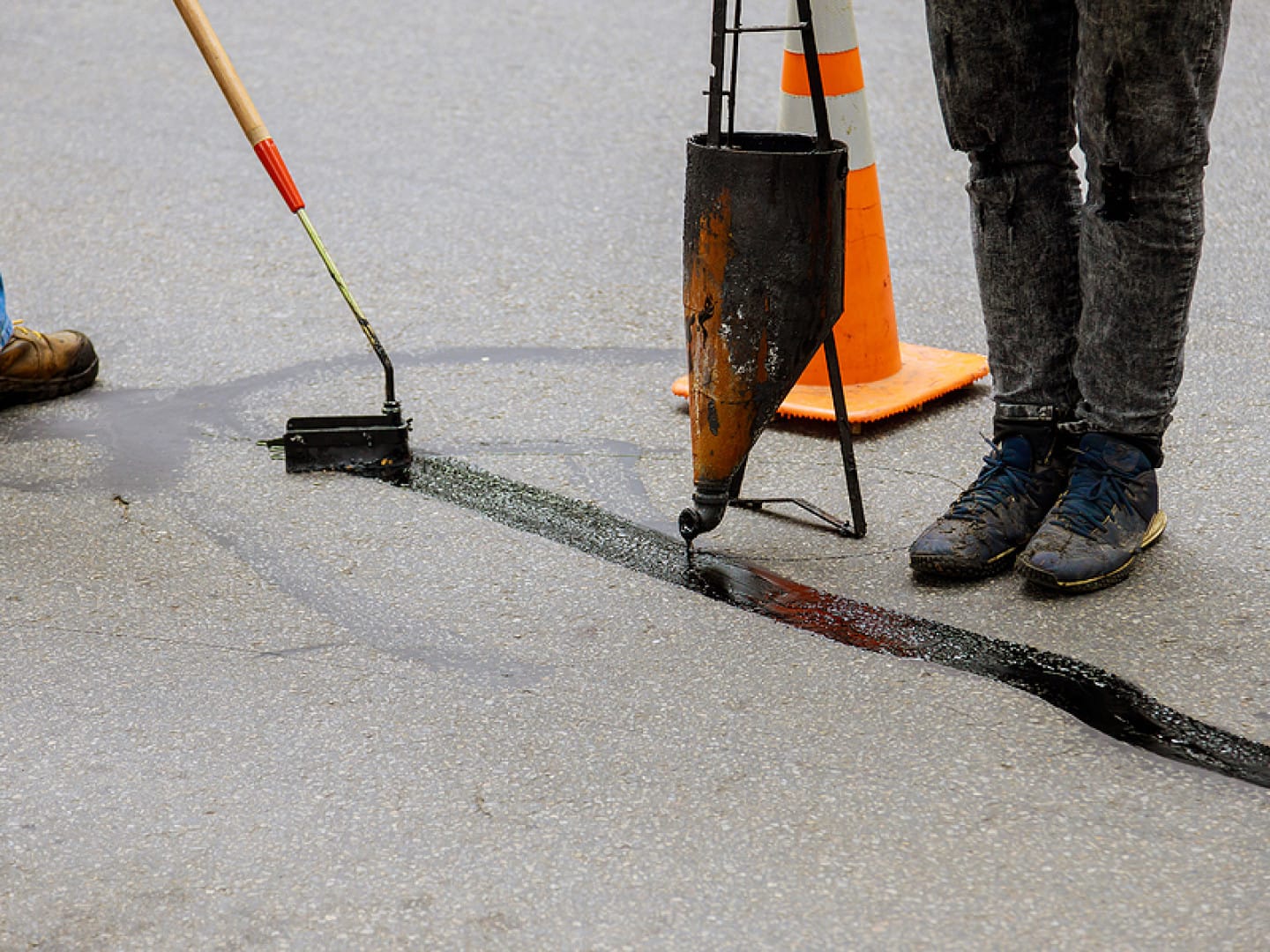
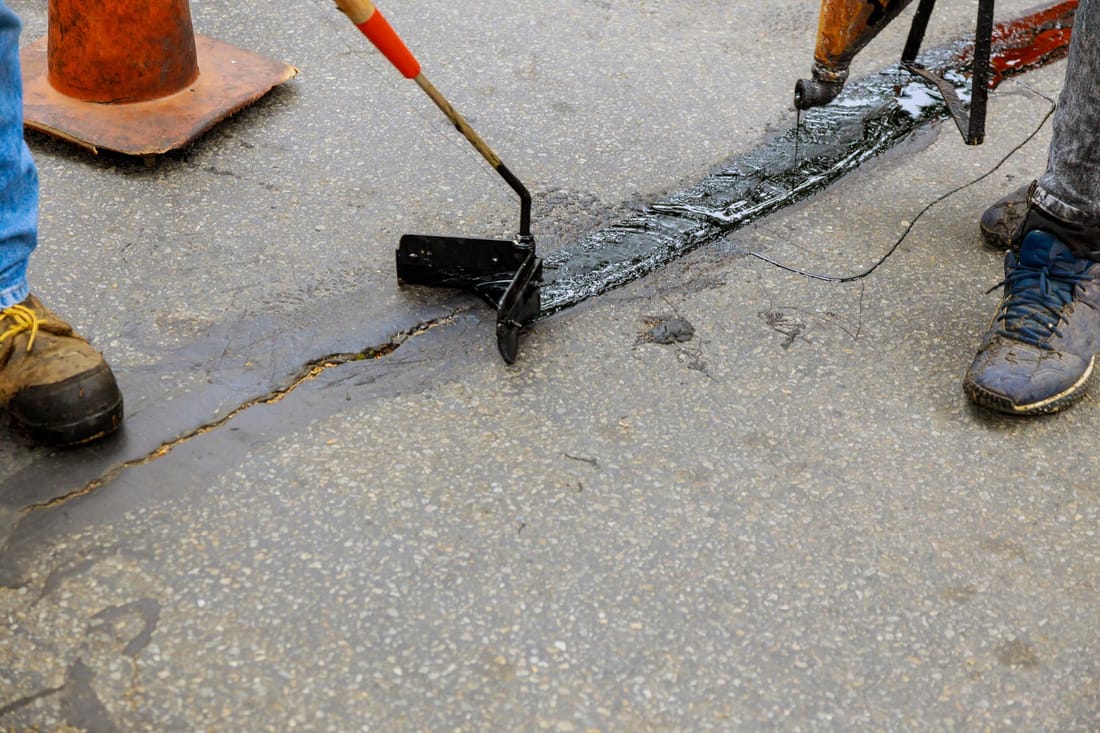
3. Crack treatment: We clean cracks with high pressure air or wire brushing to remove dirt and vegetation. For working cracks and ones wider than a quarter inch, we typically use a hot rubberized crack sealant that remains flexible as temperatures rise and fall. Smaller, non working cracks get a high quality cold pour crack filler. We make sure the filler sits slightly above the surface, then we strike it off for a smooth finish.
4. Application of sealcoat: Once the crack filler has set, we apply a commercial grade asphalt emulsion sealer. On residential driveways, we usually use a brush and squeegee method for edges and along garage doors to control splatter, and a spray application for the main field if appropriate. On larger parking lots we use a spray rig combined with squeegee passes to achieve an even, consistent coat. Some lots benefit from two thin coats instead of one thick coat which usually lasts longer and looks more uniform.
5. Curing and reopening: In Charlotte’s typical humidity, most sealcoat applications need 24 to 48 hours before they can handle normal vehicle traffic. We set up cones and tape, post start and end times, and provide a simple waiting guide so you are not guessing when to drive or park on the surface again.
What affects cost and timing for asphalt sealcoating in Charlotte
Two driveways that look similar from the street can have very different sealcoating costs. Precision Asphalt Charlotte is happy to break the numbers down so you understand where your money goes.
Square footage is the starting point, but the real cost drivers are condition and layout. A simple, straight driveway in Ballantyne with a solid surface and a few hairline cracks costs less per square foot than an older, cracked parking lot in Plaza Midwood that needs extensive crack routing, oil spot priming, and two coats of sealer.
Crack density is a big factor. A lot with only a few long, straight cracks is faster to treat than one with alligator cracking where many small cracks create broken patterns. In those areas, we may recommend patching or skin repairs rather than just filling every little crack. That takes more labor and material but gives a better result and saves you from paying to sealcoat a failing base.
Accessibility and traffic control also affect pricing. A tight urban lot that requires phasing the work, moving cars, and scheduling around business hours is more complex than a wide open suburban property where we can coat everything in one mobilization. For retail centers around Concord or Huntersville, we often schedule in sections and work overnight or early morning to keep businesses open.
Weather and season are important to timing but not usually to cost. In Charlotte, late spring through early fall is ideal for sealcoating because the sealer needs warm temperatures and dry conditions to cure. We watch the forecast and will reschedule rather than rush a job before a thunderstorm. Cutting corners with weather usually leads to peeling or streaking, which costs more to fix later.
Common asphalt problems we solve with sealcoating and crack filling
Charlotte pavements face a specific mix of problems: heavy summer sun, short cold snaps, and frequent rainstorms. Precision Asphalt Charlotte sees patterns repeat across neighborhoods, which helps us design solutions based on real local experience.
Fading and oxidation: When asphalt turns from deep black to light gray, the binder is drying out. This is common on unsealed surfaces that are 2 to 5 years old. Sealcoating restores a rich black color and adds fine aggregate that helps with traction, particularly helpful on sloped driveways in hilly parts of south Charlotte.
Linear cracking from driveways to curb: We often see cracks where the driveway meets the street or along the centerline of long driveways. These are joints and stress points. Cleaning and filling these with a flexible crack sealant keeps water from traveling along the crack and eroding the base.
Alligator cracking in parking stalls: In commercial lots, alligator cracking often appears where heavy vehicles park repeatedly or where drainage is poor. If the base is still stable, we may mill or remove the cracked area, install a patch, then sealcoat the entire lot for a uniform surface. If the base is soft or pumping water, we will tell you honestly that sealcoating will not fix it and discuss more permanent repair options.
Fuel and oil staining: Stations, loading areas, and driveways under older vehicles often have dark, soft spots where fuel or oil has soaked in. We scrape and clean these spots, apply an oil spot primer, and sometimes add a small patch layer before sealing. Proper prep here is crucial so the new sealer does not peel away.
Ponding water: Sealcoating will not remove low spots, but it can reveal where they are. During our evaluation, we note standing water and tell you if simple patch leveling is possible before sealing. In some Charlotte lots built decades ago, drainage corrections give more value than just another coat of sealer, and we will explain that so you can prioritize correctly.
How to prepare and what to expect from Precision Asphalt Charlotte
Good results start before we arrive. We make it easy for homeowners and property managers around Charlotte to get ready for asphalt sealcoating and crack filling.
Before the crew arrives, remove vehicles, trailers, and portable basketball goals from the pavement. If there are sprinkler systems that might reach the driveway or lot, shut them off 24 hours before and after the scheduled work. If you manage a commercial property, we can provide notices you can email or post for tenants so they know where to park and when.
On the day of service, our crew leader walks the site with you before work starts to confirm the areas to be sealed, any special requests, and access points. We recheck drainage concerns, mark off sensitive areas like freshly installed concrete, and set up barricades and tape to protect the work area.
During the job, expect some noise from blowers and equipment, and a distinct but temporary odor from the asphalt emulsion. We use safety signage so delivery drivers and visitors know where they can and cannot drive. For businesses, we can phase the project so a portion of the lot stays open.
After application, you will see a rich, dark finish that may look slightly streaky for the first day while it fully cures. That evens out as the sealer sets. We give you clear written guidance on when you can walk on the surface, when light vehicles are allowed, and when heavy trucks should return. In most Charlotte conditions, you can walk on it after 6 to 12 hours and drive on it after 24 to 48 hours, depending on temperature and shade.
We also talk about maintenance going forward. For most properties around Charlotte, a quality sealcoat every 3 to 5 years, combined with prompt crack filling, is a smart schedule. Precision Asphalt Charlotte keeps records of your past work, so when you call us back, we already know your surface history and can recommend only what you actually need.