Home › Industrial and Heavy-Duty Asphalt Paving
Handle heavy loads with confidence using industrial asphalt paving in Charlotte, NC. We design and construct pavements for truck yards, loading docks, and warehouse aprons with robust bases and thicker asphalt. Our solutions are engineered to resist rutting, shoving, and premature failure under constant traffic.
Precision Asphalt Charlotte provides professional industrial asphalt paving throughout Charlotte, NC, North Carolina and the surrounding area. Our licensed, insured crew delivers safe, clean, on-time work with a free estimate before anything begins. Call (704) 387-3626 or request your free quote.

Industrial Asphalt Paving for Charlotte’s Hard‑Working Sites
Industrial facilities in Charlotte put pavement under serious stress. Heavy truck traffic, forklifts with hard tires, container storage, and chemical exposure all demand more than a basic parking lot overlay. Precision Asphalt Charlotte designs and installs industrial asphalt paving built specifically for distribution centers, plants, freight yards, recycling operations, and other heavy-duty sites in the Charlotte metro.
Our focus is simple: create a surface that holds up under heavy loading and local conditions, with minimal disruption to your operations. That means analyzing your traffic patterns, the type of equipment you use, turning radii, and drainage paths before we ever bring in a paver. Every project is engineered for a defined load rating and service life, not just a thickness that “looks right.”
We understand the realities of industrial work in Mecklenburg County. Crews are trained to coordinate with on-site safety teams, follow plant PPE rules, and stage work to keep bays, loading docks, and drive aisles as functional as possible. Whether you are expanding a manufacturing pad, rebuilding a failed loading area, or converting gravel storage to asphalt, we tailor the approach to your site and your schedule.
How We Design Heavy-Duty Asphalt Systems
Industrial asphalt paving in Charlotte starts with the soil beneath your site. Our team performs field assessments of subgrade conditions, including proof-rolling to check for pumping and deflection, and in many cases recommends soil stabilization or undercutting soft spots. This step is critical to prevent rutting and fatigue cracking under repeated axle loads.
Next comes the aggregate base. For heavy-duty areas, Precision Asphalt Charlotte typically specifies a thicker, well-compacted stone base (often 8 to 12 inches or more), using NCDOT-approved materials where appropriate. We compact the base in thin lifts with vibratory rollers, checking density with field tests so the pavement structure actually supports the design loads.
On top of the base, we select a multi-course asphalt section. For example, a distribution yard with tandem-axle trucks may receive a high-stability binder course and a polymer-modified surface mix with a total thickness of 4 to 6 inches, while lighter industrial parking lanes may use a thinner cross-section. Mix choices take into account turning stress, expected fuel or oil spills, and the need for resistance to shoving at loading docks.
We also plan drainage very carefully. Industrial sites often have large paved areas, so slope design, trench drain locations, and tie-ins to existing storm structures are part of the paving plan. Standing water shortens pavement life and increases safety risks. Proper cross-slope, longitudinal slope, and inlet placement prevent ponding and reduce freeze-thaw damage during colder Charlotte nights.
Step-by-Step: Our Industrial Paving Process
Once design is set, Precision Asphalt Charlotte follows a disciplined field process. First, we handle demolition or grading, removing existing failed pavement, stockpiling or hauling spoils, and shaping the subgrade to the engineered elevations. We identify and mark underground utilities and coordinate with your maintenance or facility team so critical lines are protected.
Next, we install or recondition the stone base. Crews place stone in controlled lifts, moisten and grade it, then compact using appropriate rollers until the base meets specified density and smoothness. At this stage we tune slopes to make sure water will shed away from buildings, dock doors, and equipment pads.
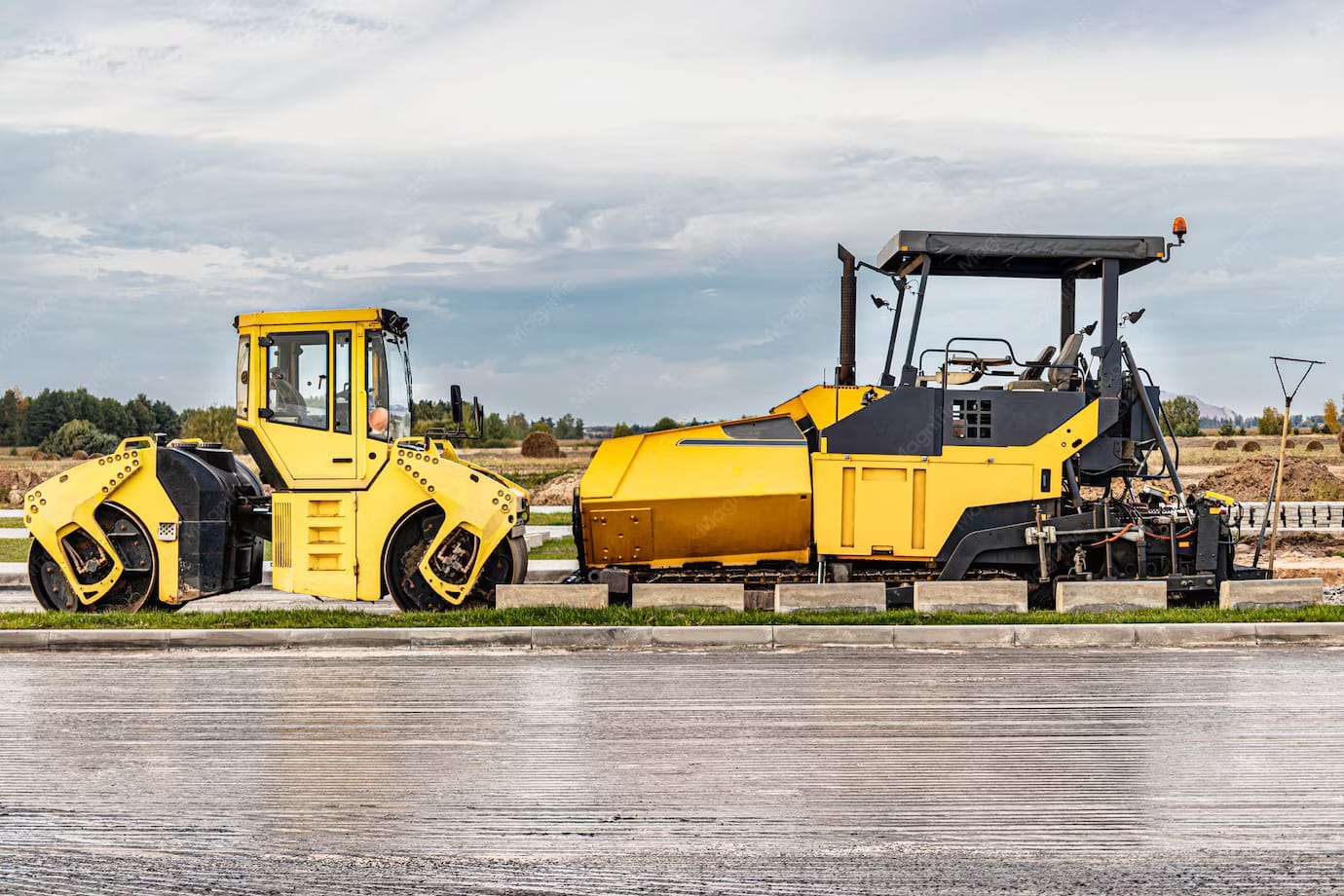
We then place asphalt in multiple lifts. A heavy-duty binder course goes down first, laid with a paver, then compacted hot with steel and pneumatic rollers while we monitor temperatures. A surface course follows, using a mix designed for industrial wear. Joints are carefully staggered and compacted to avoid weak seams in high-traffic wheel paths.
Finally, we handle finishing elements. This can include bollard and drain collar adjustments, trench drain integration, striping for truck bays and fire lanes, concrete dock aprons at dock doors, and transitions to existing pavements. Before we release the area to traffic, we conduct a walkthrough with your representative to verify elevations, joint quality, and flow toward drains.
Cost Drivers for Industrial Asphalt Paving in Charlotte
Industrial asphalt paving costs are driven by more than just square footage. The single biggest factor is pavement section, meaning base and asphalt thickness, and the type of mixes used. Areas serving loaded 18-wheelers or container handlers often require significantly thicker sections than employee parking, and that additional stone and asphalt directly affects budget.
Subgrade remediation is another major variable. Sites with soft clay pockets, poor drainage, or remnants of old fill may need undercutting, soil stabilization with lime or cement, or geotextile reinforcement under the stone base. While this work adds to upfront cost, it typically prevents premature failures and expensive rework three to five years later.
Access and phasing also matter in the Charlotte area. If work must be performed during off-shifts, weekends, or overnight to keep shipping schedules intact, labor and lighting costs can increase. Tight industrial sites can require smaller equipment, additional handwork, and more complex staging, which all affect unit pricing.
Finally, drainage structures and tie-ins to Mecklenburg County or City of Charlotte storm systems can affect total cost. Installing new inlets, rebuilding existing basins to correct elevation issues, or adding trench drains to eliminate ponding around loading docks often makes the difference between a short-lived patch and a long-term solution. During estimating, Precision Asphalt Charlotte lays out these options clearly so you can prioritize scope based on both budget and risk.
Common Industrial Pavement Problems and How We Address Them
Industrial pavements in Charlotte typically fail for specific reasons, and recognizing those patterns helps avoid repeating the same mistakes. One common issue is rutting in truck wheel paths, especially at slow-speed, high-load areas like inbound scales, guard shack approaches, and fueling points. We address this by increasing asphalt thickness in those zones, switching to stiffer or polymer-modified mixes, and widening lanes so wheel paths move over time.
Another recurring problem is alligator cracking and base failure near dock aprons and dumpster pads. These areas see point loading from trailer landing gear and rear axles, often on top of poor subgrade or inadequate base. Precision Asphalt Charlotte often redesigns these zones with thicker base, possible full-depth asphalt sections, or reinforced concrete pads tied into the surrounding asphalt.
Fuel, oil, and chemical spills can also accelerate surface deterioration. While asphalt is resilient, constant exposure in particular locations, such as around maintenance shops or fuel islands, may call for a different surface strategy. We may recommend higher-grade surface mixes, sealed joints, or concrete in small zones that experience the most contamination.
Drainage-related damage is another major factor. When water is allowed to pond, it penetrates joints and cracks and weakens the base. Corrective work can include adjusting inlets, installing new structures, or regrading and resurfacing to reestablish slope. Our crews use straightedges and laser levels during construction to ensure industrial pavements actually drain as designed, which is often where older pavements fell short.
Local Codes, Permits, and Compliance in Charlotte, NC
Industrial and heavy-duty asphalt paving projects in the Charlotte area often intersect with local regulations. If you are expanding impervious area at your facility, Mecklenburg County and the City of Charlotte may require stormwater review, especially in watershed protection areas or near regulated streams. Precision Asphalt Charlotte works within these requirements and can coordinate with your civil engineer or architect when submittals are needed.
When work impacts driveways that connect to public streets, permits or driveway approvals may be required through the City of Charlotte Department of Transportation or NCDOT, depending on jurisdiction. This is especially relevant for trucking companies or distribution centers that need widened approaches for turning movements. We build projects to the applicable standards for tie-ins, sight distance, and pavement structure.
Fire lane markings, ADA access routes from industrial parking areas to building entrances, and clear signage often come under review by the local fire marshal or building inspector. We integrate these requirements into the striping and layout phase so you are not dealing with rework after an inspection. For facilities in industrial parks with associations or private covenants, we can also match existing pavement colors, striping layouts, and section standards to keep your property in compliance with park guidelines.
By addressing permitting and compliance proactively, we help Charlotte industrial owners avoid delays and unplanned costs. Our experience with local inspectors and review processes means we can often anticipate concerns and resolve them in design instead of in the field.
Planning, Phasing, and Maintenance for Industrial Sites
Keeping your operation running while rebuilding critical pavement is often the hardest part of an industrial paving project. Precision Asphalt Charlotte develops detailed phasing plans that sequence work around your shipping peaks, production cycles, and maintenance windows. This may involve working in half-lot phases, establishing temporary access lanes, or creating alternate truck circulation paths so dock doors and gates stay functional.
We coordinate staging areas for trucks, trailers, and materials so paving activity does not interfere with internal logistics or safety protocols. Our crews attend site-specific safety orientations when required and align with your lockout, traffic control, and communication procedures. Daily updates keep your operations team informed about closures and reopenings.
Once the new pavement is in service, a targeted maintenance plan is the most cost-effective way to extend its life. For heavy-duty industrial sections, this can include scheduled crack sealing, localized patching at early distress points, and periodic sealcoating for lighter-duty lanes or parking areas where appropriate. We also recommend routine cleaning to remove standing debris and spilled materials in high-traffic and loading zones.
By approaching industrial asphalt paving as an engineered system and an ongoing asset, not just a one-time project, Precision Asphalt Charlotte helps Charlotte facilities reduce lifecycle pavement costs and avoid unscheduled downtime caused by pavement failures.